Best Corporate Retreats in the US: The Definitive Enterprise Guide
The architecture of organizational alignment has undergone a profound structural shift, moving away from legacy office-bound meeting cycles toward intentional, high-impact offsite gatherings. Designing and orchestrating executive getaways, departmental syncs, and organization-wide assemblies requires operations directors, human resource architects, and executive teams to balance complex variables ranging from regional airspace connectivity to psychological safety and schedule pacing. Choosing the right environment involves analyzing total cost of ownership against human capital outcomes, ensuring that a physical gathering yields measurable cultural and strategic clarity rather than acting as an expensive exercise in corporate tourism.
Navigating this domain requires a disciplined focus on systemic execution rather than surface-level aesthetic appeal or promotional marketing narratives. Factors such as geographical dispersion of workforces, high-speed fiber infrastructure, private buyout options, and seasonal micro-climates dictate the operational success or failure of major professional offsites. Treating retreat planning as an arbitrary venue-booking exercise routinely introduces severe financial inefficiencies, logistical bottlenecks, and diminished employee engagement.
This analysis establishes a definitive reference for evaluating, structuring, and comparing premier professional gathering environments across the United States. By examining capacity thresholds, cost-variance matrices, geographical distribution models, and long-term cultural integration trends, this review provides a comprehensive blueprint for organizations seeking to align capital allocation with transformative team experiences.
Understanding “best corporate retreats in the US.”
The commercial discourse surrounding the best corporate retreats in the US is frequently oversimplified by lifestyle publications and promotional travel blogs that equate luxury resort amenities with strategic productivity. In organizational development and corporate travel management, analyzing the best corporate retreats in the US requires a quantitative examination of breakout room acoustics, high-density Wi-Fi bandwidth stability, catering logistics, and ground transit velocity from regional airports. A common misinterpretation assumes that a high-end luxury resort automatically serves as a premier professional gathering hub, ignoring the reality that isolated luxury properties often lack the secure technical infrastructure, versatile breakout configuration, and functional workspaces required for intensive strategic planning.
Oversimplifying these operational requirements introduces profound financial exposure and administrative friction. Modern professional gatherings demand robust digital connectivity for hybrid participants, tailored nutritional programming to sustain cognitive energy, and balanced scheduling that mitigates attendee burnout. Comprehensive destination and property appraisal relies on cross-referencing historical group satisfaction data, analyzing ambient noise interference across meeting spaces, and mapping the spatial density of sleeping quarters relative to primary conference facilities.
True comprehension of this ecosystem requires recognizing how distinct company structures and growth stages demand specific environmental alignments. An early-stage software engineering team requiring rapid-fire whiteboard sessions and deep coding sprints operates under entirely different spatial constraints than a Fortune 500 executive board conducting confidential merger evaluations. When organizations assess the best corporate retreats in the US, they must apply a rigorous matrix that matches spatial architecture and human pacing directly to organizational objectives.
Deep Contextual Background
The evolution of professional offsites in the United States reflects profound shifts in labor structures, corporate psychology, and technological capabilities. Throughout the late twentieth century, corporate retreats were largely synonymous with top-down executive junkets or mandatory annual review sessions held in sterile hotel ballrooms, closely mirroring traditional office hierarchies in an external location.
A structural transformation unfolded with the rise of distributed workforces and the widespread adoption of remote operations. As permanent physical headquarters gave way to decentralized talent networks, the purpose of bringing people together shifted fundamentally. Organizations recognized that physical assembly could no longer be wasted on passive slide presentations that could easily be consumed via asynchronous video; instead, offsites became rare, high-value opportunities for forging trust, building interpersonal psychological safety, and resolving complex cross-functional friction.
In contemporary markets, this trajectory is further shaped by an increased focus on employee holistic wellbeing, environmental sustainability, and experiential place-based programming. Properties catering to high-end organizational gatherings have transitioned from standardized hotel chains to specialized mountain lodges, converted agricultural estates, and private coastal compounds designed specifically to foster unstructured dialogue and cognitive recovery alongside rigorous strategic execution.
Conceptual Frameworks and Mental Models
Navigating venue selection and agenda design for complex organizational offsites requires analytical mental models that synthesize spatial, psychological, and financial constraints.
1. The Cognitive Energy Curve
This model maps the daily stamina of participants, dictating that high-intensity strategic workshops must be paired with mandatory unstructured downtime and natural immersion to prevent cognitive exhaustion.
2. The Spatial Intimacy Index
This framework evaluates whether a property’s layout encourages organic, serendipitous interactions over coffee and meals versus isolating teams within sprawling, disconnected resort complexes.
3. The Asynchronous Value Multiplier
This mental model measures whether the specific outcomes of an in-person gathering could have been achieved remotely, ensuring that capital is deployed exclusively for objectives requiring physical proximity and tactile collaboration.
Key Categories and Variations of Retreat Venues
Choosing an appropriate environment requires categorizing properties by their structural capabilities, scale limits, and operational trade-offs.
-
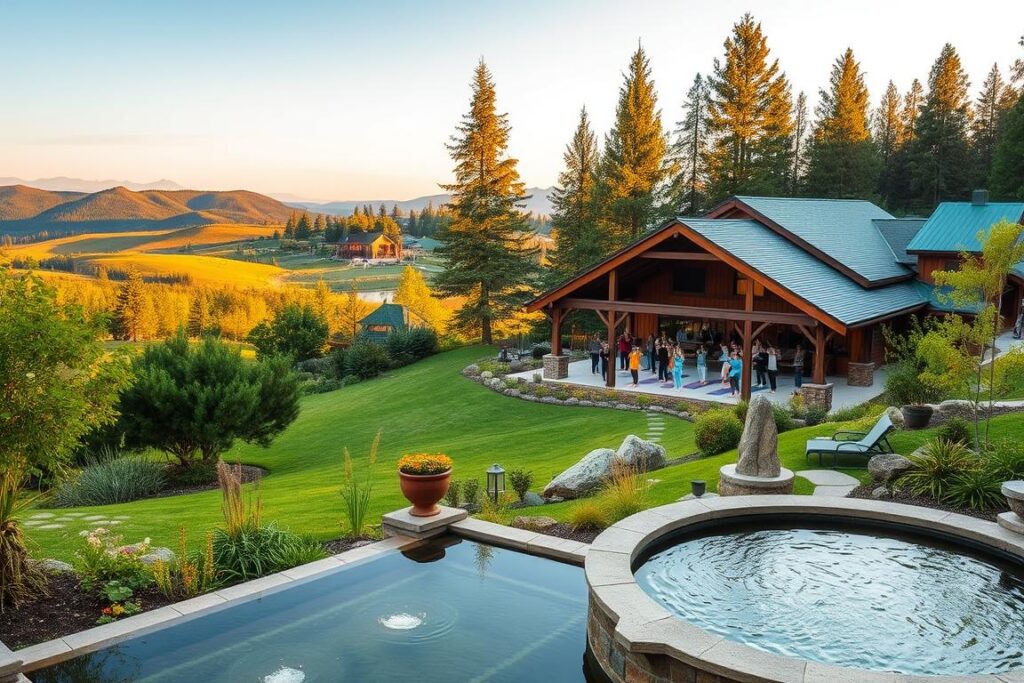
Alpine Mountain Lodges: Scenic high-altitude properties offering immersive natural environments and outdoor adventure programming (e.g., Colorado Rockies, Wasatch Range in Utah). Trade-off: Exceptional team bonding and inspiring views, balanced by potential weather disruptions and complex regional airport transfers.
-
Coastal and Island Estates: Waterfront properties providing serene marine atmospheres and focused seclusion (e.g., Pacific Northwest islands, coastal Maine, South Carolina Lowcountry). Trade-off: High inspiration and privacy, balanced by elevated peak-season rates and limited backup indoor spaces during inclement weather.
-
Converted Agricultural and Ranch Properties: Expansive rural estates offering complete property buyouts, rustic charm, and working farm integrations (e.g., Texas Hill Country, Hudson Valley in New York). Trade-off: Absolute privacy and distinct cultural flavor, balanced by variable high-speed digital infrastructure and specialized transportation logistics.
-
Design-Forward Urban Sanctuaries: Boutique properties embedded within vibrant cultural districts offering seamless access to urban dining and arts while maintaining private retreat spaces (e.g., Austin, Santa Fe, Portland). Trade-off: Superior culinary and transit access, balanced by urban distractions and lack of total wilderness seclusion.
-
Desert Wellness Compounds: Arid, expansive environments engineered around holistic health, open horizons, and minimal sensory distraction (e.g., Greater Scottsdale, Palm Springs). Trade-off: Outstanding climate consistency and wellness infrastructure, balanced by severe seasonal temperature extremes.
-
Historic Academic and Conference Centers: Specialized institutional properties featuring dedicated lecture halls, breakout auditoriums, and structured lodging (e.g., Hudson Valley conference campuses, New England academic enclaves). Trade-off: Unmatched meeting functionality and AV infrastructure, balanced by institutional aesthetics that may lack resort-style inspiration.
Comparison of Major Retreat Venue Categories
| Venue Category | Typical Capacity Limit | Cost Index | Digital Infrastructure | Primary Operational Advantage |
| Alpine Mountain Lodges | 20 – 150 participants | High | Moderate-High | Inspiring natural backdrops and active team building |
| Coastal & Island Estates | 15 – 80 participants | High-Extreme | Moderate | Total privacy and reflective waterfront settings |
| Agricultural & Ranch Estates | 25 – 200 participants | Moderate-High | Variable | Exclusive property buyouts and authentic local culture |
| Design-Forward Urban Hubs | 30 – 300 participants | Moderate | Excellent | Exceptional dining diversity and cultural immersion |
| Desert Wellness Compounds | 20 – 100 participants | High | High | Structured wellness programming and reliable climate |
Realistic Decision Logic
When leadership teams evaluate the best corporate retreats in the US, they must align venue architecture with the psychological objective of the gathering. If an organization is navigating a major structural re-organization requiring intense emotional alignment, cross-departmental trust-building, and open vulnerability, selecting a sterile urban hotel conference room represents an absolute operational failure. In such cases, private agricultural estates or secluded mountain lodges that offer complete buyouts and campfire gathering spaces become mandatory. Conversely, for a technical engineering sprint requiring high-speed fiber connectivity, multiple digital whiteboards, and immediate breakout computing labs, selecting a design-forward urban hub or an institutional conference center delivers superior technical reliability and logistical efficiency.
Detailed Real-World Scenarios and Operational Dynamics
To understand how venue characteristics influence professional retreat execution in practice, examine four distinct operational field scenarios.
The Alpine Weather Isolation Trap
A high-growth tech startup books a secluded mountain lodge in the Rocky Mountains for a critical Q4 strategic planning retreat.
-
Failure Mode: An unseasonal winter blizzard hits during the opening evening, cutting off power to half of the cabins and delaying incoming executive flights into regional airstrips.
-
Second-Order Effect: The structured agenda is entirely dismantled, forcing the team to pivot to improvised crisis management, though serendipitously sparking unexpected, honest discussions about company resilience.
The Agricultural Estate Connectivity Failure
An enterprise product team rents an expansive historical ranch estate marketed as an authentic rustic retreat for an intensive digital product roadmap sprint.
-
Failure Mode: The property’s legacy satellite internet infrastructure collapses under the bandwidth demands of thirty simultaneous developer laptops accessing cloud repositories and video streams.
-
*Second-Order Effect: Product development grinds to a halt for two days while temporary cellular hotspots are hastily shipped via overnight courier at exorbitant expense.
The Urban Boutique Sanctuary Triumph
A distributed executive team selects a design-forward boutique property in Santa Fe for a leadership alignment offsite, blending morning strategy sessions with curated local culinary experiences.
-
Failure Mode: None encountered; the property provides seamless acoustic privacy in meeting rooms while keeping the team within walking distance of world-class dining and cultural galleries.
-
Second-Order Effect: Strategic objectives are met ahead of schedule, participant burnout is actively avoided through balanced pacing, and team cohesion scores reach an all-time high.
The Resort Buyout Privacy Breach
A mid-sized financial firm books a partial block of rooms at a large multi-use coastal resort for a confidential merger planning retreat.
-
Failure Mode: Public hotel guests and competing corporate groups occupy adjacent swimming and dining areas, leading to accidentally overheard conversations regarding sensitive financial data.
-
Second-Order Effect: Leadership is forced to lock down meeting spaces permanently and cancel casual outdoor networking, severely dampening the collaborative atmosphere of the offsite.
Planning, Cost, and Resource Allocation
Evaluating retreat economics requires looking past baseline lodging rates to calculate total cost efficiency across all logistical vectors.
Financial Dynamics and Cost Variability
| Expense Category | Premium Buyout Range (USD) | Standard Resort Block Range (USD) | Primary Cost Drivers |
| Exclusive Property Buyout / Night | $15,000 – $60,000+ / night | N/A (Per room: $350 – $900) | Property exclusivity, seasonal demand, acreage |
| Full-Board Catering & Beverage | $150 – $350+ / person / day | $100 – $250 / person/day | Farm-to-table sourcing, dietary customization, alcohol |
| Facilitation & Professional MCs | $5,000 – $20,000 flat fee | Optional / Self-guided | Executive coaching credentials, custom workshop design |
| Group Ground Transportation | $2,000 – $8,000 total | $1,000 – $4,000 total | Distance from major airport hubs, shuttle sizing |
Opportunity Costs and Resource Optimization
A frequent planning miscalculation involves selecting a distant, hard-to-reach wilderness retreat solely based on scenic photography while ignoring the lost productivity of multi-leg travel days for employees. Organizations that thoroughly investigate the best corporate retreats in the US weigh these transit overheads against the psychological rejuvenation provided by the destination. Allocating capital toward direct group charter flights or properties within a two-hour radius of major domestic hubs preserves employee energy and maximizes actual working hours on-site.
Tools, Strategies, and Support Systems
Executing flawless corporate retreat strategies requires an ecosystem of specialized sourcing tools, data platforms, and planning partnerships.
-
Curated Retreat Sourcing Platforms: Specialized marketplaces connecting organizations with vetted buyout properties and experiential venues (e.g., Retreats & Venues, This Is The Place, specialized corporate offsite agencies).
-
Collaborative Digital Whiteboarding & Ideation Suites: Cloud tools enabling distributed teams to maintain continuous visual workflows before, during, and after physical offsites.
-
Dietary and Preference Collection Software: Automated survey tools capturing granular nutritional restrictions, rooming preferences, and accessibility requirements.
-
Travel and Flight Coordination Dashboards: Centralized itinerary management platforms tracking multi-city arrivals and coordinating ground shuttle synchronization.
-
On-Site Facilitation and Team-Building Networks: Vetted directories of professional moderators specializing in conflict resolution, strategic visioning, and experiential workshops.
-
Carbon Footprint Tracking and Sustainability Calculators: Modules measuring the environmental impact of delegate travel and property energy consumption to satisfy ESG reporting mandates.
-
Offline Contingency Communication Tools: Decentralized messaging platforms and satellite hotspot hardware deployments for remote or weather-vulnerable wilderness properties.
-
Post-Retreat Feedback and Sentiment Analytics: Structured survey engines designed to measure psychological safety, alignment clarity, and cultural impact over trailing 30-day windows.
Risk Landscape and Failure Modes
The risk profile associated with planning and executing corporate retreats across diverse domestic environments combines logistical vulnerabilities with psychological and cultural hazards.
Compounding Risks in Retreat Planning
-
Over-Programmed Agendas: Packing schedules from 7:00 AM to 10:00 PM with zero unstructured reflection time, triggering acute physical exhaustion and psychological resistance among attendees.
-
Inadequate Privacy Controls: Utilizing multi-use public venues where confidential corporate strategies can be exposed to competitors or external media observers.
-
Cultural Exclusion: Designing activities or physical excursions that alienate team members with physical disabilities, dietary restrictions, or caregiving responsibilities.
-
Logistical Single Points of Failure: Relying on a single remote mountain road or a sole regional airline carrier with high cancellation rates for all participant arrivals.
Governance, Maintenance, and Long-Term Adaptation
Sustaining high performance in organizational offsite strategy requires continuous evaluation, structured feedback loops, and proactive portfolio diversification across seasonal windows.
Monitoring and Review Cycles
People operations committees and executive leadership must execute rigorous pre-offsite readiness audits, real-time pacing adjustments during live deployment, post-offsite cultural impact surveys over 90-day intervals, and annual venue portfolio reviews.
Layered Maintenance Checklist
-
Venue Security and Privacy Audit: Confirming exclusive access zones and digital encryption standards on local property networks six months before arrival.
-
Accessibility and Inclusivity Review: Evaluating physical terrain, seating configurations, and dietary provisions to ensure complete psychological and physical comfort for all staff.
-
Vendor and Contract Milestone Tracking: Auditing deposit schedules, force majeure clauses, and weather cancellation insurance policies at critical intervals.
-
Post-Retreat Strategic Continuity Check: Verifying that action items, accountability owners, and cultural takeaways generated during the offsite are integrated directly into core project management systems.
Measurement, Tracking, and Evaluation
Evaluating the success of a corporate retreat strategy requires balancing quantitative operational metrics against qualitative cultural signals.
-
Quantitative Metrics: Total cost per participant, schedule adherence percentage, travel delay frequency, post-offsite project velocity, and employee retention rates over trailing twelve-month periods.
-
Qualitative Signals: Psychological safety survey scores, cross-departmental collaboration sentiment, leadership clarity ratings, and qualitative feedback on pacing and venue suitability.
-
Documentation Standards: Maintaining an exhaustive internal repository of past retreat agendas, vendor evaluations, financial reconciliations, and strategic outcome summaries to guide future planning cycles.
Common Misconceptions and Oversimplifications
-
Myth: The best corporate retreats require exotic international travel or ultra-luxurious five-star resorts to achieve meaningful team alignment.
-
Correction: Effective alignment depends on psychological safety, intentional pacing, and clear facilitation rather than excessive luxury or complex international transit.
-
-
Myth: Jamming every waking hour with structured presentations and workshops guarantees the highest return on investment.
-
Correction: Over-programmed agendas destroy cognitive energy and eliminate the casual networking moments where true breakthrough innovations occur.
-
-
Myth: Remote and hybrid teams only need one massive annual gathering to sustain strong organizational culture.
-
Correction: Distributed organizations increasingly benefit from smaller, frequent departmental micro-retreats tailored to specific project milestones.
-
-
Myth: Property buyouts are an unnecessary expense when standard hotel room blocks can accommodate the team.
-
Correction: Partial hotel blocks invite privacy breaches and external distractions that severely compromise confidential strategic discussions.
-
-
Myth: Professional facilitation is an optional luxury that experienced internal managers can easily replace without specialized training.
-
Correction: Neutral third-party facilitators are often essential for neutralizing internal political friction and maintaining objective workshop momentum.
-
-
Myth: Weather contingencies can be safely ignored if the primary activities are planned around indoor breakout rooms.
-
Correction: Regional weather extremes frequently disrupt air transport and local infrastructure, stranding participants before they reach the venue.
-
Ethical, Practical, and Contextual Considerations
Planning and executing professional retreats carries significant practical and ethical responsibilities. Large corporate groups can place considerable strain on local natural ecosystems, water supplies, and rural infrastructure in fragile destination environments. Organizational leaders who prioritize properties with rigorous sustainability standards—such as renewable energy microgrids, zero-waste kitchen initiatives, and active land preservation partnerships—help mitigate environmental degradation. Furthermore, ensuring that offsite schedules respect employee personal time, honor diverse physical abilities, and maintain inclusive environments free from exclusionary social pressures is a fundamental operational standard that defines mature organizational leadership.
Conclusion
The strategic evaluation, spatial planning, and psychological precision required for identifying and utilizing the best corporate retreats in the US represent the ultimate intersection of human resource management, operational logistics, and organizational design. By moving past superficial resort marketing and confronting the rigorous realities of cognitive energy pacing, digital infrastructure reliability, privacy and security, and total cost management, organizations can craft environments that spark genuine trust and strategic clarity. Whether deploying capital across alpine mountain lodges, coastal estates, or design-forward urban sanctuaries, achieving lasting offsite success requires an unyielding commitment to intellectual honesty, structural coherence, and human-centric design.